1 Day
The OPITO Basic H₂S Training programme is the internationally recognised standard for personnel working in environments where hydrogen sulphide (H₂S) gas may be present. Sour gas, as H₂S is commonly known in the industry, is one of the most hazardous substances encountered in oil and gas operations. Colourless, highly toxic, and heavier than air, H₂S is present in many of Indonesia’s producing fields and is a recognised risk across upstream operations from wellsite to processing facility.
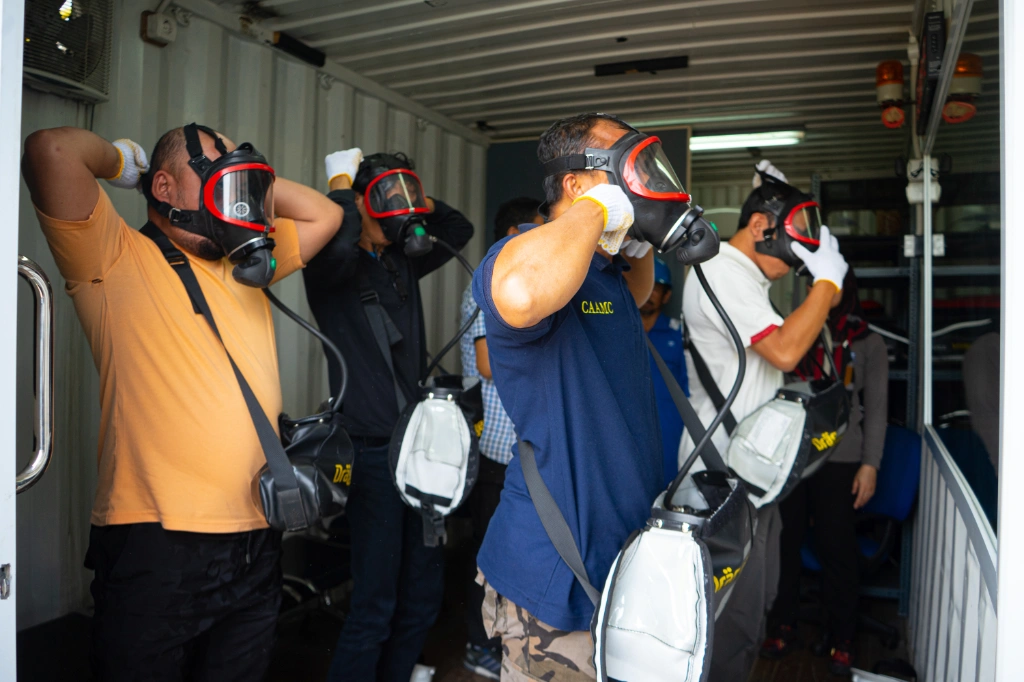
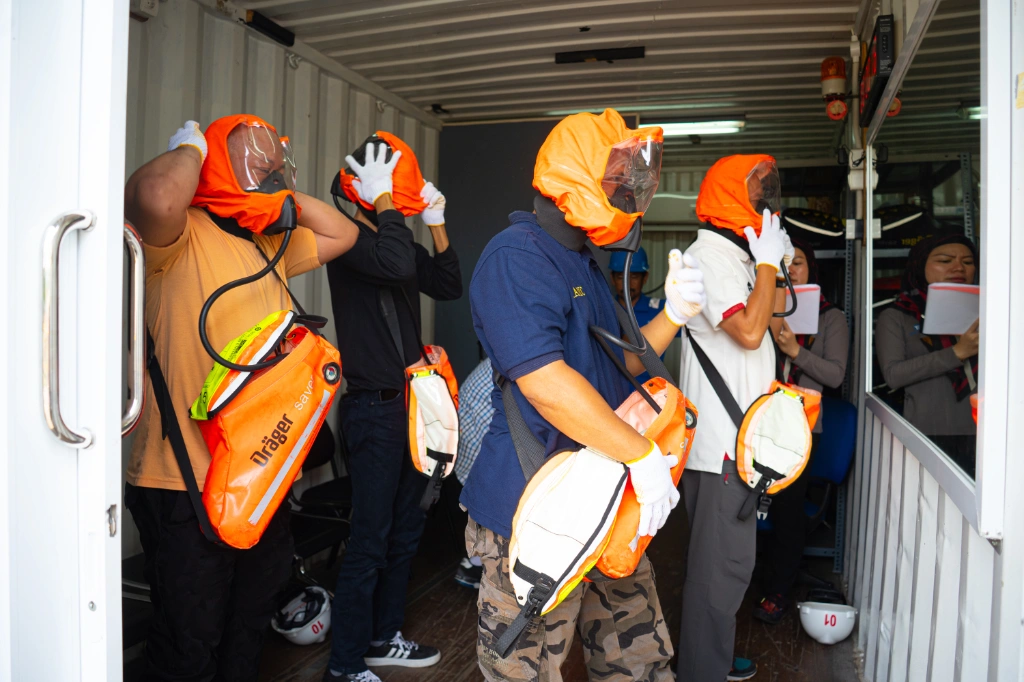
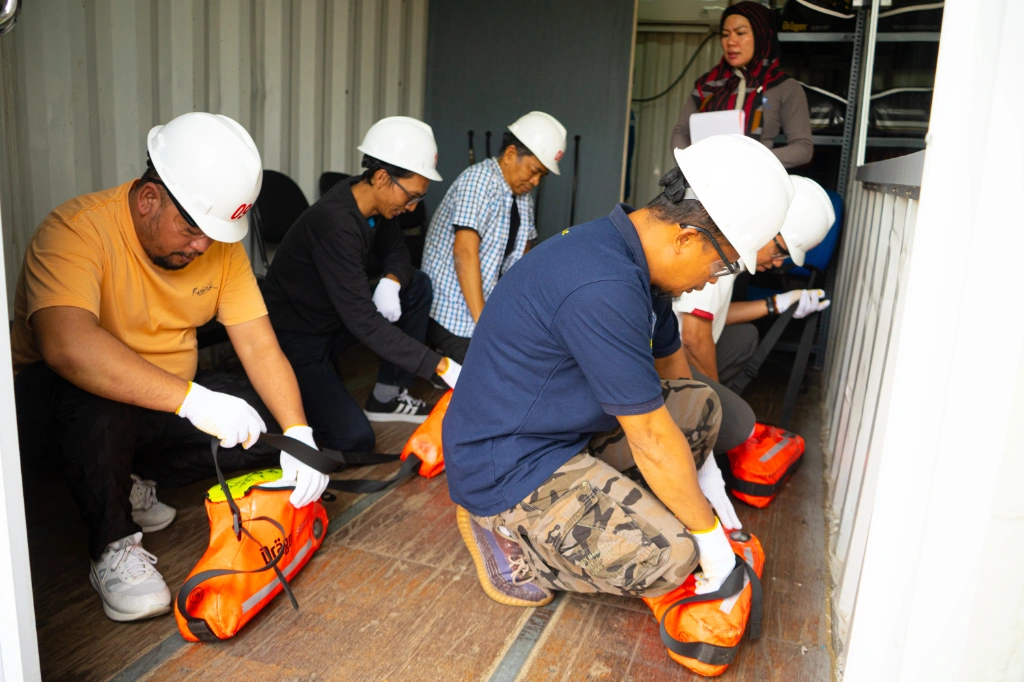
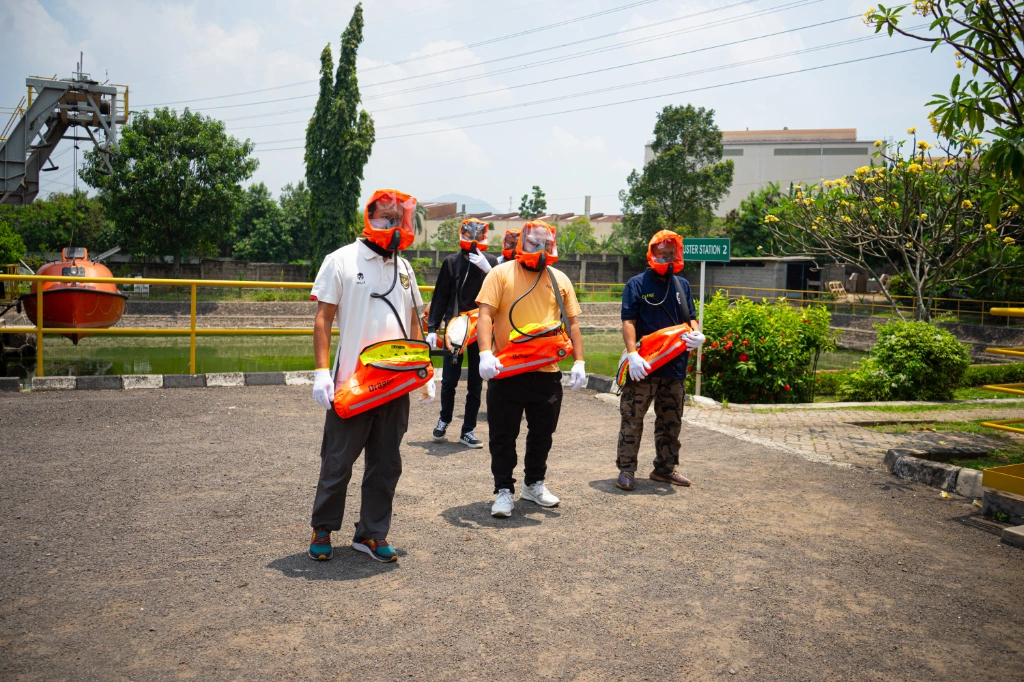
Basic H₂S Training ensures that all personnel entering or working in potentially H₂S-affected environments have the knowledge and practical skills to recognise the hazard, use personal detection equipment correctly, respond appropriately when an alarm is activated, and don and operate Escape Breathing Apparatus (EBA), both mask and hood types, within the required 30-second timeframe. The programme also covers connection and disconnection to an emergency cascade breathing system while wearing Escape Breathing Apparatus (EBA), a critical skill for personnel who may need to extend their breathing air supply during an emergency evacuation.
Basic H₂S Training may be delivered at our Cilegon training centre or at the client’s own facility, making it suitable for both scheduled training and pre-mobilisation programmes for remote projects. Delivered in accordance with OPITO Product Code 9014, Basic H₂S certification is valid for two years. To remain certified, personnel must repeat the Basic H₂S Training programme before certificate expiry.
This includes upstream oil and gas personnel working at wellsites, drilling operations, production facilities, gas processing plants, and pipeline operations involving sour service. It is equally relevant for contractors, maintenance personnel, and support staff who may enter designated H₂S risk zones. Many operators across Indonesia and Southeast Asia require current Basic H₂S certification as a condition of site access, alongside or in addition to BOSIET or T-BOSIET certification.
The Basic H₂S Training programme provides learners with the foundational knowledge and practical skills required to recognise hydrogen sulphide hazards and respond safely in environments where H₂S may be present. It covers the properties and hazards of H₂S, workplace exposure limits and detection methods, emergency response actions, and the correct use of personal detection equipment and escape breathing apparatus.
The programme is designed for delivery as a standalone course or in combination with other offshore safety programmes. It can be delivered at our Cilegon training centre or on-location at a client facility, subject to OPITO requirements for remote delivery.
The objectives of this training are that learners will be able to:
This unit provides a comprehensive grounding in the nature of H₂S as an industrial hazard and equips learners with the knowledge and practical skills to respond safely when H₂S is detected. Theoretical learning covers:
Practical exercises are conducted under instructor supervision and include:
There are no scheduled dates for this course at this time. Contact us to organise a class or request a specific date.
This course can be delivered on-site if the location & student numbers meet minimum requirements. Contact us to find out more.
Discover how we can enhance the safety and well-being of your workforce — reach out to our friendly team today!